1. Subsidence or ground movement
Subsidence is one of the biggest causes in UK brick homes.
This happens when soil beneath foundations shifts or shrinks, causing parts of the house to move unevenly.
Common triggers:
- Clay soil drying out in hot weather
- Large nearby trees extracting moisture
- Leaking drains washing soil away
- Historic settlement in older properties
2. Thermal expansion and contraction
Brick expands and contracts with temperature changes. Over years, this movement can create cracks, especially where extensions join original walls.
3. Foundation settlement
Many older UK homes naturally settle over decades. Minor movement is normal, but repeated stress can crack masonry.
4. Lintel failure
Lintel problems above windows or doors can cause stepped cracking in brickwork.
Signs:
- Cracks radiating from window corners
- Sagging brickwork above openings
5. Wall tie corrosion (older cavity walls)
In some houses built in the mid-1900s, steel wall ties rust and expand, pushing brickwork apart.
6. Nearby building work or vibration
Excavation, extensions, heavy traffic, or nearby piling can sometimes trigger movement.
What kinds of cracks usually need stitching?
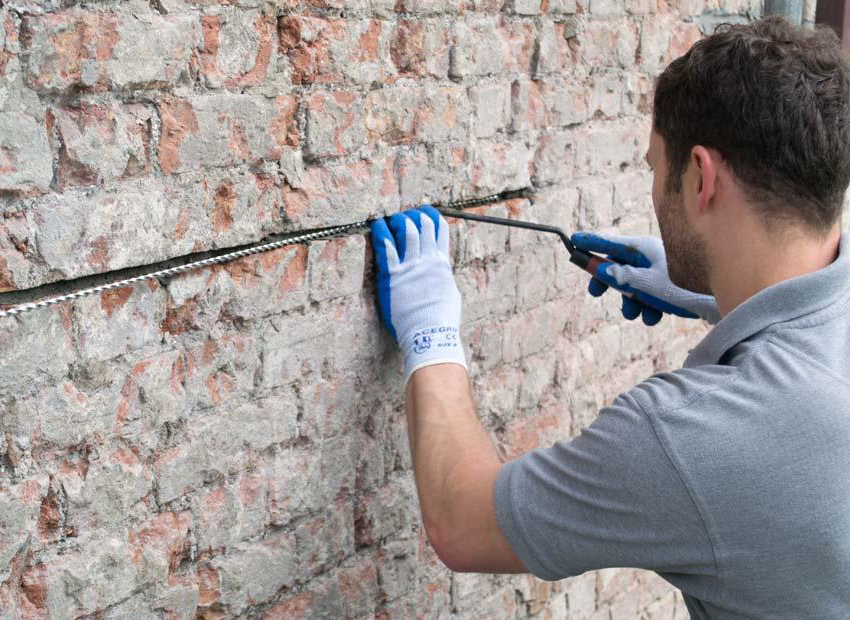
Crack stitching is commonly used for:
- Stepped cracks in brick mortar joints
- Diagonal cracks from windows/doors
- Stable structural cracks where movement has stopped
- Localized wall movement
It’s not always suitable if:
- foundations are still actively moving
- the wall is bulging or unstable
- severe subsidence needs underpinning first
A good contractor should confirm the crack is stable before stitching. If the underlying cause is ongoing, the crack may return.
Signs a crack may be structural
More concerning signs include:
- Wider than ~3–5 mm
- Stair-step pattern in bricks
- Wider at the top than bottom
- Doors/windows sticking
- Fresh cracking after repairs
- Gaps around frames
Hairline plaster cracks indoors are often cosmetic; stepped brick cracks outside deserve more attention.
Important distinction
Crack stitching fixes the symptom (the cracked wall), not always the cause.
If a leaking drain or active subsidence caused the crack, that underlying issue must be fixed first—or the wall may crack again.
When it’s a good sign
If a surveyor recommends crack stitching instead of underpinning, that is often relatively positive—it usually means the movement is limited or historic, and the house can often be stabilized without major foundation work.
If you’ve got a specific crack pattern (e.g., stepped crack near a window, vertical crack, widening crack), send a photo and I can tell you what it most likely indicates and whether stitching is usually the right repair.